
 Does it help a blind man if we light his room with a bulb ten times more powerful than the one he is used to? Silly question, right? We all know that the problem is not the amount of light available to the man. The problem is that a blind man cannot see.
Obvious though it is to say so, a blind man needs sight BEFORE he can see. Of course, he must have light to see, but a blind person needs A WHOLE LOT MORE than light. He needs new eyes. He needs a miracle. He needs the gift of sight.
Jesus said, “Unless a man is born again he CANNOT SEE the kingdom of God.” – John 3.
Spiritually speaking, man is not near sighted. He is blind. His problem cannot be corrected by an act of human will. He needs the miracle of sight. Jesus said that unless he is born again (born from above) it is impossible for him to see the kingdom of God. Man desperately needs the light of the gospel yet, spiritually speaking, he is totally blind to it until God enables him to “see.”
2 Corinthians 4:3-6 confirms this as the Apostle Paul states, “3 And even if our gospel is veiled, it is veiled to those who are perishing. 4 In their case the god of this world has blinded the minds of the unbelievers, to keep them from seeing the light of the gospel of the glory of Christ, who is the image of God. 5 For what we proclaim is not ourselves, but Jesus Christ as Lord, with ourselves as your servants for Jesus’ sake. 6 For God, who said, “Let light shine out of darkness,” has shone in our hearts to give the light of the knowledge of the glory of God in the face of Jesus Christ.”
Paul likens the giving of spiritual sight to the miracle of creation itself. There is nothing more powerful than that. Just as God said “Let there be light” and light came into being, God has said, “Let there be light” in the heart of every true child of God. That is why, “if any man be in Christ, he is a new creation. The old has gone, the new has come.”
As much as we enjoy hearing the testimonies of God’s healing power, the child of God has experienced a miracle far more powerful and far more meaningful than anything on a merely physical plane. God has taken out a heart of stone with its total inability to “see” and in its place, put in a heart of flesh, which, having now seen the immensity of His worth, adores Christ and is enraptured with His gospel of grace. Do you see just how precious this is?
In humble gratitude for the mercy of God, the born again man can only say “amen” to these words of Jesus: “BUT BLESSED ARE YOUR EYES BECAUSE THEY SEE…” (Matt 13:16).
Amazing Grace how sweet the sound
That saved a wretch like me
I once was lost but now am found
Was blind but now I see
As the Gospel goes forth today, may God open up the eyes of the blind.
 I don’t really like the phrase “eternal security” or its popular counterpart “once saved always saved” because both tend to come with a huge amount of unscriptural theological baggage. For many people, “eternal security” means that if a person makes some sort of profession of faith and then lives a lifestyle totally at odds with that profession, even renouncing Christianity altogether, they are still “saved” because “once saved, always saved.” I don’t believe that to be a Scriptural concept in any way at all.
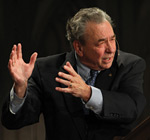 Dr. R. C. Sproul Saint Augustine was cynically asked, “What was God doing before He created the world? Augustine’s alleged reply was: “Creating hell for curious souls.”