
Why some chosen and not others?

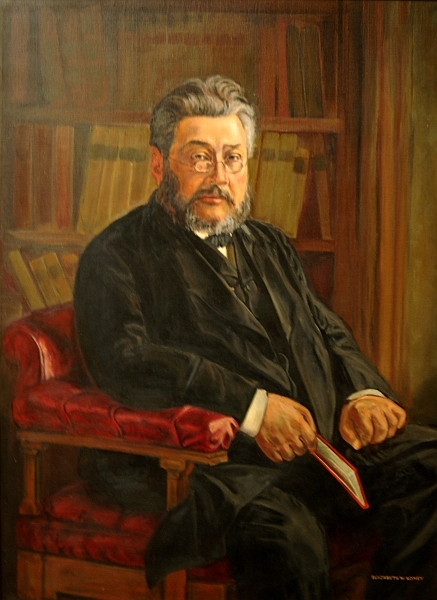
spurgeon-portrait-roney“But there are some who say, ‘It is hard for God to choose some and leave others.’ Now, I will ask you one question. Is there any of you here this morning who wishes to be holy, who wishes to be regenerate, to leave off sin and walk in holiness? ‘Yes, there is,’ says some one, ‘I do.’ Then God has elected you. But another says, ‘No; I don’t want to be holy; I don’t want to give up my lusts and my vices.’ Why should you grumble, then, that God has not elected you to it? For if you were elected you would not like it, according to your own confession. If God this morning had chosen you to holiness, you say you would not care for it. Do you not acknowledge that you prefer drunkenness to sobriety, dishonesty to honesty? You love this world’s pleasures better than religion; then why should you grumble that God has not chosen you to religion? If you love religion, he has chosen you to it. If you desire it, he has chosen you to it. If you do not, what right have you to say that God ought to have given you what you do not wish for?

Supposing I had in my hand something which you do not value, and I said I shall give it to such-and-such a person, you would have no right to grumble that I did not give to you. You could not be so foolish as to grumble that the other has got what you do not care about. According to your own confession, many of you do not want religion, do not want a new heart and a right spirit, do not want the forgiveness of sins, do not want sanctification; you do not want to be elected to these things: then why should you grumble? You count these things but as husks, and why should you complain of God who has given them to those whom he has chosen? If you believe them to be good and desire them, they are there for thee. God gives liberally to all those who desire; and first of all, he makes them desire, otherwise they never would. If you love these things, he has elected you to them, and you may have them; but if you do not, who are you that you should find fault with God, when it is your own desperate will that keeps you from loving these things—your own simple self that makes you hate them?

Suppose a man in the street should say, ‘What a shame it is I cannot have a seat in the chapel to hear what this man has to say.’ And suppose he says, ‘I hate the preacher; I can’t bear his doctrine; but still it’s a shame I have not a seat.’ Would you expect a man to say so? No: you would at once say, ‘That man does not care for it. Why should he trouble himself about other people having what they value and he despises?’ You do not like holiness, you do not like righteousness; if God has elected me to these things, has he hurt you by it? . . . If any of you love to be saved by Jesus Christ, Jesus Christ elected you to be saved. If any of you desire to have salvation, you are elected to have it, if you desire it sincerely and earnestly. But, if you don’t desire it, why on earth should you be so preposterously foolish as to grumble because God gives that which you do not like to other people?” (Charles H. Spurgeon, sermon on 2 Thessalonians 2:13, available at www.Monergism.com).

“And let the one who is thirsty come; let the one who desires take the water of life without price” (Rev. 22:17b).

How can I know if I am elect?

but that is not possible; it is only to be discovered by “looking to Jesus.”1 If you desire to ascertain your own election, after the following manner shall you assure your heart before God.

Do you feel yourself to be a lost, guilty sinner? Go straight to the cross of Christ, and tell Jesus so, and tell Him that you have read in the Bible, “Whoever comes to me I will never cast out.”2 Tell Him that He has said, “The saying is trustworthy and deserving of full acceptance, that Christ Jesus came into the world to save sinners.”3 Look to Jesus and believe on Him, and you shall make proof of your election directly, for as surely as you believe, you are elect.

If you will give yourself wholly up to Christ and trust Him, then you are one of God’s chosen ones; but if you stop and say, “I want to know first whether I am elect,” you do not know what you are asking. Go to Jesus, just as you are, in all your guilt. Leave all curious inquiry about election alone. Go straight to Christ, and hide in His wounds, and you shall know your election. The assurance of the Holy Spirit shall be given to you, so that you shall be able to say, “I know whom I have believed, and I am convinced that he is able to guard until that Day what has been entrusted to me.”4

Christ was at the everlasting council-He can tell you whether you were chosen or not; but you cannot find it out in any other way. Go and put your trust in Him, and His answer will be, “I have loved you with an everlasting love; therefore I have continued my faithfulness to you.”5 There will be no doubt about His having chosen you when you have chosen Him.

Sons we are through God’s election,
Who in Jesus Christ believe.

1 – Hebrews 12:2
2 – John 6:37
3 – 1 Timothy 1:15
4 – 2 Timothy 1:12
5 – Jeremiah 31:3

From “Morning and Evening,” written by C.H. Spurgeon, revised and updated by Alistair Begg and made available by Truth for Life.

Five reasons to embrace the doctrine of election

but precious. Of course, it can’t be precious if it’s not true. So that’s the biggest reason we embrace it. But let’s start with a definition:

Unconditional election is God’s free choice before creation, not based on foreseen faith, to which traitors he will grant faith and repentance, pardoning them, and adopting them into his everlasting family of joy.

1. We embrace unconditional election because it is true.

All my objections to unconditional election collapsed when I could no longer explain away Romans 9. The chapter begins with Paul’s readiness to be cursed and cut off from Christ for his unbelieving Jewish kinsmen (verse 3). This implies that some Jews are perishing. And that raises the question of God’s promise to the Jews. Had it failed? Paul answers, “It is not as though the word of God has failed” (verse 6). Why not?

Because “not all who are descended from Israel belong to Israel” (verse 6). In other words, God’s purpose was not to acquit every individual person in Israel. It was instead a purpose of election.

So to illustrate the point of God’s unconditional election Paul uses the analogy of Jacob and Esau: “Though they were not yet born and had done nothing either good or bad — in order that God’s purpose of election might continue, not because of works but because of him who calls — [Rebekah] was told, ‘The older will serve the younger’” (verses 11–12).

In other words, God’s original purpose in choosing individuals for himself out of Israel (and all the nations! Revelation 5:9) was not based on any conditions that they would meet. It was an unconditional election. And thus he says, “I will have mercy on whom I have mercy, and I will have compassion on whom I have compassion” (verse 15; see verses 16–18; Romans 11:5–7).

Jesus confirms this teaching: “All that the Father gives me will come to me, and whoever comes to me I will never cast out” (John 6:37). Coming to Jesus is not a condition we meet to qualify for election. It is the result of election. The Father has chosen his sheep. They are his. And he gives them to the Son. That is why they come. “No one can come to me unless it is granted him by the Father” (John 6:65). “You did not choose me, but I chose you” (John 15:16; see John 17:2, 6, 9; Galatians 1:15).

In the book of Acts why did some believe and not others? Luke’s answer is election: “As many as were appointed to eternal life believed” (Acts 13:48). This “appointment” — this election—was not based on foreseen faith, it was the cause of faith.

In Ephesians 1 Paul says, “[God] chose us in [Christ] before the foundation of the world. . . . In him we have obtained an inheritance, having been predestined according to the purpose of him who works all things according to the counsel of his will” (Ephesians 1:4, 11). It is the “counsel of God’s will” that is eternally decisive in this affair.

What will you say to God at the judgment if he asks, “Why did you believe on my Son while others didn’t?” You will not say: “Because I was smarter.” No. Surely you will say, “Because of your grace. Had you not chosen me, I would have been left spiritually dead, unresponsive, guilty.”

2. We embrace unconditional election because God designed it to make us fearless in our proclamation of his grace in a hostile world.

“If God is for us, who can be against us? . . . Who shall bring any charge against God’s elect?” (Romans 8:31, 33).

3. We embrace unconditional election because God designed it to make us humble.

“God chose what is foolish in the world to shame the wise . . . so that no human being might boast in the presence of God. . . . Let the one who boasts, boast in the Lord” (1 Corinthians 1:27, 29, 31).

4. We embrace unconditional election because God made it a powerful moral impetus for compassion, kindness, and forgiveness.

“Put on then, as God’s chosen ones, holy and loved, compassionate hearts, kindness . . . forgiving each other” (Colossians 3:12–13). No one has seen or savored his election truly who is not moved by it to become kind and patient and forgiving.

5. We embrace unconditional election because it is a powerful incentive in our evangelism to help unbelievers who are great sinners not despair.

When you offer Christ freely to all unbelievers, suppose one says, “I have sinned too terribly. God could never choose to save me.” The most ultimate despair-destroying thing you can say is this: Do you realize that God chose before the foundation of the world whom he will save? And he did it based on absolutely nothing in you. Before you were born or had done anything good or bad, God chose whether to save you or not.

Therefore, you dare not get in God’s face and tell him what qualifications you lack in order to be chosen. There were no qualifications for being chosen. “What then should I do?” he asks. “Believe in the Lord Jesus Christ, and you will be saved” (Acts 16:31). That’s how you begin to “confirm your calling and election” (2 Peter 1:10). If you will embrace the Savior, you will confirm that you are elect, and you will be saved.