
 David Murray writes:
If you had the choice between private Bible reading and prayer, or going to church, which would you choose?
The Puritans would choose church.
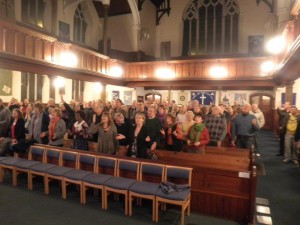
Surprising isn’t it? We all know the Puritans’ welcome emphasis on private devotion and personal godliness. But they actually rated public worship even higher. For example, David Clarkson, colleague and successor to John Owen, preached a sermon on Psalm 87v2 entitled Public worship to be preferred before private, and gave 12 reasons why:
1. The Lord is more glorified by public worship than private. God is glorified by us when we acknowledge that He is glorious, and He is most glorified when this acknowledgement is most public.
2. There is more of the Lord’s presence in public worship than in private. He is present with his people in the use of public worship in a special way: more effectually, constantly, and intimately.
3. God manifests himself more clearly in public worship than in private. For example, in Revelation, Christ is manifested “in the midst of the churches.”
4. There is more spiritual advantage in the use of public worship. Whatever spiritual benefit is to be found in private duties, that, and much more may be expected from public worship when rightly used.
5. Public worship is more edifying than private. In private you provide for your own good, but in public you do good both to yourselves and others.
6. Public worship is a better security against apostasy than private. He who lacks or reject public worship, whatever private means he enjoy, is in danger of apostasy.
7. The Lord works his greatest works in public worship. Conversion, regeneration, etc., are usually accomplished through public means.
8. Public worship is the nearest resemblance of heaven. In the Bible’s depictions of heaven, there is nothing done in private, nothing in secret; all the worship of that glorious company is public.
9. The most renowned servants of God have preferred public worship before private. The Lord did not withdraw from public ordinances, though they were corrupt. Public worship was more precious to the apostles than their safety, liberty, and lives
10. Public worship is the best means for procuring the greatest mercies, and preventing and removing the greatest judgments.
11. The precious blood of Christ is most interested in public worship. Private worship was required of, and performed by Adam and his posterity, even in a sinless state, but the public preaching of the Gospel and the administration of the sacraments have a necessary dependence on the death of Christ.
12. The promises of God are given more to public worship than to private. There are more promises to public than to private worship, and even the promises that seem to be made to private duties are applicable and more powerful for public worship.
 The Church is Subordinate to the Word of God (And Not the Other Way Around)