
The Gospel According to the Church Fathers

by Nathan Busenitz (from a blogpost California.
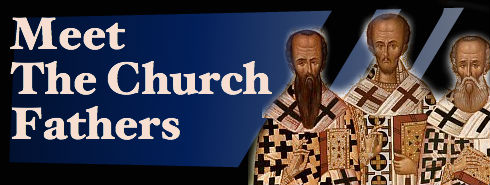
After the apostles died, was the gospel hopelessly lost until the Reformation?

That certainly seems to be a common assumption in some Protestant circles today. Thankfully, it is a false assumption.

I’m not entirely sure where that misconception started. But one thing I do know: it did not come from the Protestant Reformers.

The Reformers themselves (including Luther, Zwingli, Calvin, and others) were convinced that their position was not only biblical, but also historical. In other words, they contended that both the apostles and the church fathers would have agreed with them on the heart of the gospel.

For example, the second-generation Lutheran reformer, Martin Chemnitz (1522-1586), wrote a treatise on justification in which he defended the Protestant position by extensively using the church fathers. And John Calvin (1509-1564), in his Institutes, similarly claimed that he could easily debunk his Roman Catholic opponents using nothing but patristic sources. Here’s what he wrote:

If the contest were to be determined by patristic authority, the tide of victory — to put it very modestly —would turn to our side. Now, these fathers have written many wise and excellent things. . . . [Yet] the good things that these fathers have written they [the Roman Catholics] either do not notice, or misrepresent or pervert. . . . But we do not despise them [the church fathers]; in fact, if it were to our present purpose, I could with no trouble at all prove that the greater part of what we are saying today meets their approval.

Source: John Calvin, “Prefatory Address to King Francis I of France,” The Institutes of the Christian Religion, Section 4.

How could the Reformers be so confident that their understanding of the gospel was consistent with the teachings of the ancient church? Or perhaps more to the point: What did the early church fathers have to say about the gospel of grace?

Here is an admittedly brief collection of 30 patristic quotes, centering on the reality that justification is by grace alone through faith alone. Many more could be provided. But I think you’ll be encouraged by this survey look at the gospel according to the church fathers.

(Even if you don’t read every quote, just take a moment to consider the fact that, long before Luther, the leaders of the ancient church were clearly proclaiming the gospel of grace through faith in Christ.)

1. Clement of Rome (30-100): “And we, too, being called by His will in Christ Jesus, are not justified by ourselves, nor by our own wisdom, or understanding, or godliness, or works which we have wrought in holiness of heart; but by that faith through which, from the beginning, Almighty God has justified all men; to whom be glory forever and ever. Amen.”

Source: Clement, First Epistle to the Corinthians, 32.4.
Continue reading
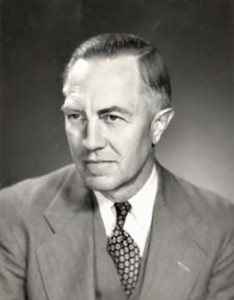
The Truth About Calvin and Servetus by Loraine Boettner

Dr. Boettner was a graduate of Princeton Theological Seminary (Th.B., 1928; Th.M., 1929), where he studied Systematic Theology under the late Dr. C. W. Hodge. In 1933 he received the honorary degree of Doctor of Divinity, and in 1957 the degree of Doctor of Literature.

His books include: The Reformed Doctrine of Predestination, Roman Catholicism, and The Millennium.

We must now consider an event in the life of Calvin which to a certain extent has cast a shadow over his fair name and which has exposed him to the charge of intolerance and persecution. We refer to the death of Servetus which occurred in Geneva during the period of Calvin’s work there. That it was a mistake is admitted by all. History knows only one spotless being—the Savior of sinners. All others have marks of infirmity written which forbid idolatry.

Calvin has, however, often been criticized with undue severity as though the responsibility rested upon him alone, when as a matter of fact Servetus was given a court trial lasting over two months and was sentenced by the full session of the civil Council, and that in accordance with the laws which were then recognized throughout Christendom. And, far from urging that the sentence be made more severe, Calvin urged that the sword be substituted for the fire, but was overruled. Calvin and the men of his time are not to be judged strictly and solely by the advanced standards of our twentieth century, but must to a certain extent be considered in the light of their own sixteenth century. We have seen great developments in regard to civil and religious toleration, prison reform, abolition of slavery and the slave trade, feudalism, witch burning, improvement of the conditions of the poor, etc., which are the late but genuine results of Christian teachings. The error of those who advocated and practiced what would be considered intolerance today, was the general error of the age. It should not, in fairness, be permitted to give an unfavorable impression of their character and motives, and much less should it be allowed to prejudice us against their doctrines on other and more important subjects.

The Protestants had just thrown off the yoke of Rome and in their struggle to defend themselves they were often forced to fight intolerance with intolerance. Throughout the sixteenth and seventeenth centuries public opinion in all European countries justified the right and duty of civil governments to protect and support orthodoxy and to punish heresy, holding that obstinate heretics and blasphemers should be made harmless by death if necessary.

Protestants differed from Romanists mainly in their definition of heresy, and by greater moderation in its punishment. Heresy was considered a sin against society, and in some cases as worse than murder; for while murder only destroyed the body, heresy destroyed the soul. Today we have swung to the other extreme and public opinion manifests a latitudinarian indifference toward truth or error.

During the eighteenth century the reign of intolerance was gradually undermined. Protestant England and Holland took the lead in extending civil and religious liberty, and the Constitution of the United States completed the theory by putting all Christian denominations on a parity before the law and guaranteeing them the full enjoyment of equal rights.

Calvin’s course in regard to Servetus was fully approved by all the leading Reformers of the time. Melanchthon, the theological head of the Lutheran Church, fully and repeatedly justified the course of Calvin and the Council of Geneva, and even held them up as models for imitation. Nearly a year after the death of Servetus he wrote to Calvin: “I have read your book, in which you clearly refuted the horrid blasphemies of Servetus…. To you the Church owes gratitude at the present moment, and will owe it to the latest posterity. I perfectly assent to your opinion. I affirm also that your magistrates did right in punishing, after regular trial, this blasphemous man.” Continue reading

Pillars of Grace

GROUNDBREAKING OVERVIEW OF THE DOCTRINES OF GRACE IN CHURCH HISTORY

I wish every Christian would watch this video below to gain a sense of history when it comes to the doctrines of grace. It would be extremely enlightening to so many people.

The fact is, Calvinism did not begin with John Calvin. There was very little in the teachings of Calvin that was not first in Martin Luther (Calvin was merely the one who taught the doctrines in a structured and systematic way). Furthermore, it would be a huge mistake to think that the doctrines of grace started with the Magisterial Reformers. The concept of God’s Sovereignty in grace and redemption has been the constant declaration of the people of God throughout the history of the Church. Yet very few seem to be aware of this.

At a short session at the recent Ligonier 2011 National Conference, Dr. Steve Lawson was asked to talk about his new book. There’s good reason he was asked to do so. The book is the second in a series, the first being “Foundations of Grace” which articulates just about every Scripture verse in the Bible that deals with the doctrines of grace, starting with Genesis and ending in Revelation. I am not aware of another book of its kind.

Now, Dr. Lawson has produced another ground breaking work in “Pillars of Grace.” It is ground breaking because it combines four years of study, delving deeply into the writings of the great gifts of the ascended Christ to His Church through the centuries, men of God who taught the precious doctrines we hold dear.

I cannot recommend this video highly enough. I really hope you can carve out 23 minutes of your time to watch it. For every Reformed Christian who embraces the precious doctrines of grace, it will do your heart and soul much good.

Steven Lawson: “Pillars of Grace” from Ligonier on Vimeo.

UPDATE: Readers of this “EFFECTUAL GRACE” blog are now allowed an EXCLUSIVE 10% discount on ALL purchases at Ligonier. When you place your order online, simply type in the coupon code EGRACE10

For those wishing to purchase the book you can do so by typing in the words “Pillars of Grace” in the “Search Store” feature at the top right of the page at this link: Ligonier Ministries Online Store