The Hardening of Pharaoh and the Hope of the World
(Sermon by John Piper, © Desiring God. Website: desiringGod.org)
Exodus 9:8-17
And the LORD said to Moses and Aaron, “Take handfuls of soot from the kiln, and let Moses throw them in the air in the sight of Pharaoh. 9 It shall become fine dust over all the land of Egypt, and become boils breaking out in sores on man and beast throughout all the land of Egypt.” 10 So they took soot from the kiln and stood before Pharaoh. And Moses threw it in the air, and it became boils breaking out in sores on man and beast. 11 And the magicians could not stand before Moses because of the boils, for the boils came upon the magicians and upon all the Egyptians.
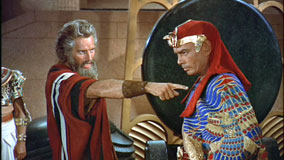 12 But the LORD hardened the heart of Pharaoh, and he did not listen to them, as the LORD had spoken to Moses. 13 Then the LORD said to Moses, “Rise up early in the morning and present yourself before Pharaoh and say to him, ‘Thus says the LORD, the God of the Hebrews, “Let my people go, that they may serve me. 14 For this time I will send all my plagues on you yourself, and on your servants and your people, so that you may know that there is none like me in all the earth. 15 For by now I could have put out my hand and struck you and your people with pestilence, and you would have been cut off from the earth. 16 But for this purpose I have raised you up, to show you my power, so that my name may be proclaimed in all the earth. 17 You are still exalting yourself against my people and will not let them go.
 How shall we know God? How shall we know what God is like and how we are to think about him? When I ask myself this question, one response comes crashing into my mind with overwhelming certitude: human opinion counts for nothing. What you feel about the way God should be and what I feel about the way God should be counts for nothing. If someone rises up and makes a pronouncement about what they can believe and can’t believe about God, that is as significant in determining what is true about God as the creaking of a window in the wind. Human opinion counts for nothing in defining God.
How than shall we know him? For it is very crucial that we know him. If he is there, nothing in the universe matters more than he does. If he is there, he is like the thunder clap and we are like the scratch on a faint recording. If he is there, he is like the sun shining in full strength and we are like dust-mote floating in the morning beam of bedroom light. If he is there, he is absolute and we are utterly dependent.
But now I am risking putting my opinions forward, which don’t matter at all. How shall we know him? We will know him by his own initiative to reveal himself. This he did most clearly and powerfully in sending his Son, Jesus Christ. Jesus said, “Whoever has seen me has seen the Father” (John 14:9). Then he said that he would send the Holy Spirit to guide his apostles into all truth so that the truth of Christ and the Father would be preserved and displayed in the inspired Word of Scripture (John 16:13). The effect of this promise was that the apostles could say, “We impart this in words not taught by human wisdom but taught by the Spirit” (1 Corinthians 2:13).
Drawing Upon the Old Testament
But the apostles and their associates who preserved the truth of Christ for us in their gospels and letters were led by the Spirit in them to immerse themselves in the Old Testament as well as the teachings of Jesus. “In many and various ways God spoke of old to our fathers by the prophets” (Hebrews 1:1). As the Spirit led the apostles into all truth, he did so by leading them to a true and deep understanding of what God had done and said in the Old Testament.
This is what we see all through the book of Romans, especially in chapter 9 where we have been since November 3. In Romans 9:4-5 he deals with “the glory, the covenants, the giving of the law, the worship, and the promises, the patriarch” – all of which he sees in the Old Testament. In verses 6-12 he deals with Isaac and Ishmael and Jacob and Esau from Genesis. In verse 13 he refers to Malachi 1:2-3, “Jacob I loved and Esau I hated.” In verse 15 he quotes Exodus 33:19 (“I will have mercy on whom I have mercy, and I will have compassion on whom I have compassion”), and builds his argument for the justice of God on it. And then in verse 17 he quotes Exodus 9:16 and concludes from it in verse 18, “So then he has mercy on whomever he wills, and he hardens whomever he wills.”
So if we ask, How can we know God? God’s answer is: I reveal myself to you mainly in my Son Jesus Christ, and through his inspired apostles in the New Testament, who take us back to the earlier revelation of God in history and show us that all of divine revelation is of one piece. The God of the Exodus is the God of Romans. The God who dealt with Pharaoh is the God who deals with us.
So Paul roots his teaching about the sovereignty of God and the freedom of God and unconditional election in the Old Testament at every point in Romans 9. He is eager for us to see that New Testament revelation of God is one with Old Testament revelation of God. Continue reading
 In the debate between monergists (those who believe only one power is operative in regeneration, namely God’s power alone) and synergists (those who believe more than one party is at work in regeneration, namely God and man) I believe it is fair to say that only the monergist takes the “cannots” of the Bible seriously. Though man can do a great many things, Scripture is clear as to his limitations. Just as it is impossible for man to jump to the moon or run a mile in less than a minute, so it is outside of man’s natural capabilities to do certain spiritual things.