 Dr. R. C. Sproul, in his book, “Chosen by God” writes:
“It is ironic that in the same chapter, indeed in the same context, in which our Lord teaches the utter necessity of rebirth to even see the kingdom, let alone choose it, non-Reformed views find one of their main proof texts to argue that fallen man retains a small island of ability to choose Christ. It is John 3:16:
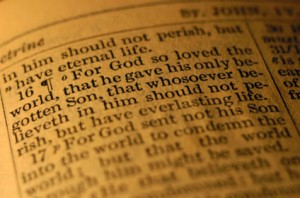
“For God so loved the world that He gave His only begotten Son, that whoever believes in Him should not perish but have everlasting life.”
What does this famous verse teach about fallen man’s ability to choose Christ? The answer, simply, is nothing. The argument used by non-Reformed people is that the text teaches that everybody in the world has it in their power to accept or reject Christ. A careful look at the text reveals, however, that it teaches nothing of the kind. What the text teaches is that everyone who believes in Christ will be saved. Whoever does A (believes) will receive B (everlasting life). The text says nothing, absolutely nothing, about who will ever believe. It says nothing about fallen man’s natural moral ability. Reformed people and non-Reformed people both heartily agree that all who believe will be saved. They heartily disagree about who has the ability to believe.
Some may reply, “All right. The text does not explicitly teach that fallen men have the ability to choose Christ without being reborn first, but it certainly implies that.” I am not willing to grant that the text even implies such a thing. However, even if it did it would make no difference in the debate. Why not? Our rule of interpreting Scripture is that implications drawn from the Scripture must always be subordinate to the explicit teaching of Scripture. We must never, never, never reverse this to subordinate the explicit teaching of Scripture to possible implications drawn from Scripture. This rule is shared by both Reformed and non-Reformed thinkers.
If John 3:16 implied a universal natural human ability of fallen men to choose Christ, then that implication would be wiped out by Jesus’ explicit teaching to the contrary. We have already shown that Jesus explicitly and unambiguously taught that no man has the ability to come to him without God doing something to give him that ability, namely drawing him.
Fallen man is flesh. In the flesh he can do nothing to please God. Paul declares, “The fleshly mind is enmity against God; for it is not subject to the law of God, nor indeed can be. So then, those who are in the flesh cannot please God” (Rom. 8:7, 8).
We ask, then, “Who are those who are ‘in the flesh’?” Paul goes on to declare: “But you are not in the flesh but in the Spirit, if indeed the Spirit of God dwells in you” (Rom. 8:9). The crucial word here is if. What distinguishes those who are in the flesh from those who are not is the indwelling of the Holy Spirit. No one who is not reborn is indwelt by God the Holy Spirit. People who are in the flesh have not been reborn. Unless they are first reborn, born of the Holy Spirit, they cannot be subject to the law of God. They cannot please God.
God commands us to believe in Christ. He is pleased by those who choose Christ. If unregenerate people could choose Christ, then they could be subject to at least one of God’s commands and they could at least do something that is pleasing to God. If that is so, then the apostle has erred here in insisting that those who are in the flesh can neither be subject to God nor please him.
 We conclude that fallen man is still free to choose what he desires, but because his desires are only wicked he lacks the moral ability to come to Christ. As long as he remains in the flesh, unregenerate, he will never choose Christ. He cannot choose Christ precisely because he cannot act against his own will. He has no desire for Christ. He cannot choose what he does not desire. His fall is great. It is so great that only the effectual grace of God working in his heart can bring him to faith.”