

Friday Round Up

(1) Please pray for a young lady named Alisa in a Denver hospital (daughter of a very good friend of mine, Jim). She is only 17 and is under going radiation treatment for a brain tumor. Thanks so much. Jim writes:

The latest up-date on my lovely daughter Alisa. 3 weeks ago they did a new MRI. That showed the original tumor had not grown any with the chemo and radiation treatments. But it also showed that a new cyst had developed. She was scheduled to go back to Childrens Hospital on Monday the 17 to possibly have more surgery.

They thought they might need to put in another drain… Alisa had been having severe headaches for the past couple days. They did a new MRI and decided that at 7:30 am Friday they are going back in to put the shunt, back in her head. It seems the liquid has built up and is pushing on the nerves. The MRI did also show that the new cyst has gotten smaller too. So please keep praying for her, GOD BLESS. The picture is Alisa in the center and her 2 awesome sisters. 🙂
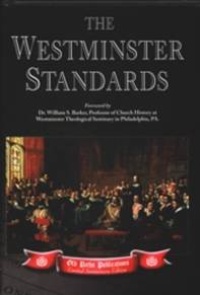
(2) There’s a variety of resources in this week’s Friday Ligonier $5 sale worth considering.

(3) Some quotes:

“No therapist, no psychiatrist can relieve you of guilt. He or she may help you to resolve feelings of false guilt that can arise for a variety of reasons. Prescription drugs may provide certain kinds of ease. But no therapy, no course of drugs, can deliver you from real guilt. Why? Because being guilty is not a medical condition or a chemical disorder. It is a spiritual reality. It concerns your standing before God. The psychiatrist cannot forgive you; the therapist cannot absolve you; the counselor cannot pardon you. But the message of the Gospel is this: God can forgive you, and He is willing to do so.” – Dr. Sinclair Ferguson

“Faith is the fruit of regeneration, not the cause of it.” – R.C. Sproul

“Unity without the gospel is a worthless unity; it is the very unity of hell.” J.C. Ryle

“If you do not listen to theology, that will not mean you have no ideas about God, rather it will mean you have a lot of wrong ones.” – C.S. Lewis

“It is true that the Lord’s Supper is only for sinners. But within that group, it is only for repentant sinners.” – Mark Dever

“The greatest use of life is to spend it for something that will outlast it.” – William James

“The bare knowledge of God’s will is inefficacious, it doth not better the heart. Knowledge alone is like a winter sun, which hath no heat or influence; it doth not warm the affections, or purify the conscience. Judas was a great luminary, he knew God’s will, but he was a traitor.” – Thomas Watson

“A supporter of “easy-believism” argued, “The opposite of “easy believism” is “difficult believism.” So how good exactly does one have to be before he is *really* a Christian in your estimation?”

Answer: The Bible declares that Belief (or faith) is not merely difficult, but rather IMPOSSIBLE for the natural man. So the opposite of “easy believism” is not “difficult believism”. Those who think faith is either “easy” or “difficult” are both wrong, according to the Bible. If someone thinks faith is “easy” or even possible, apart from grace, then they do not understand our condition as human beings or our real need of grace. Those who think faith is something easy are making the same mistake as those who think good works save. Both are trusting in some self-generated meritorious act, rather than Christ alone who provides everything we need for salvation, including a new heart to believe and obey.” – John Hendryx

Answering a Critic of Reformed Theology

Pastor Jim McClarty – an ex-rocker, current preacher, saved by astounding grace (and my friend) provides very good (biblical) responses to a critic of Reformed theology:

Because I am a very public advocate for Calvinism (which is a nickname for the historic theology that lays at the heart of the Protestant Reformation), I occasionally hear from critics. Sometimes, their arguments are logical and well-presented. Other times, they’re little more than rants. Usually, they’re somewhere in-between. And I answer most of them — avoiding the really silly or truly angry ones.

The reason I’m sharing this particular exchange is because it includes assumptions and arguments that are typical and that show up in my in-box with increasing frequency. Some folk simply cannot conceive of God being absolutely sovereign so they attempt to argue against it by insisting that such sovereignty would necessarily make God evil. And that’s where we’ll jump into the exchange –

The Critic writes:
When the philosophy that drives Calvinism is projected to its logical conclusion, even Satan’s activity is an extension of God’s sovereignty. God sovereignly controls Satan’s every move.

Jim:
Not only is that the logical conclusion of Calvinism, it’s the logical conclusion of Biblical sovereignty. The alternative is to have an uncontrolled devil running roughshod over God’s creation. But, the Bible is full of examples of God limiting and binding Satan. Consider Job. Or Satan’s desire to sift Peter, but Christ intervened. Even Legion could not take the herd of swine without Jesus’ consent.

Or, to look at it another way, we know that in the book of Revelation Satan is bound and put into an abyss for 1000 years. Afterward he is released, vanquished, and placed in the Lake of Fire. Now, since we know that God has the power to do that, why has He not done it yet? The only rational answer is: Satan plays a part in God’s economy. When God is done with him, He will judge him and seclude him eternally.

Remember, God’s way are not our ways. His thoughts are not our thoughts. As high as the Heavens are above the earth, so are God’s ways higher than our ways and His thoughts higher than our thoughts. Just because we struggle with the idea of God’s absolute power, that doesn’t mean it isn’t true or that God cannot exercise it.

Critic:
This makes God the author of everything evil, and the most wicked sinner of all.

Jim:
The Bible repeatedly declares God’s holiness and righteousness. So, if Calvinism led to the idea that God was not only the “author of evil,” but the most wicked of sinners, the whole theology would have been abandoned by thoughtful churchmen years and years ago. The reason Calvinism continues to thrive is that it recognizes God’s sovereignty and His holiness. Straw man arguments about how that makes God sinful are just banal.

Theologically, God does not have to be evil in order to create evil in His universe. Just as darkness is the natural state of all unlit matter and energy is necessary to produce light, God can produce evil in His creatures simply by withholding His goodness. He does not have to be positively evil to do this. He merely has to withhold Himself and allow the natural darkness to have its way.

Critic:
Some Calvinists actually admit what I said and seek to defend it from Scripture. If ultimately God sovereignly is in control of everything, and if free will of man, angels, or even Satan, is ultimately under the control of God, then the responsibility for all wickedness and evil must be placed at the feet of God Himself.

Jim:
There are no Calvinists who “actually admit” that God is “the most wicked sinner of all.” Please attempt to present our position in a manner consistent with what we ourselves say about it.

Volumes have been written on this topic. God is the creator, sustainer, and purpose behind all things. But, that is not tantamount with being the author of evil. That’s why Satan exists. Satan is the instrument through which necessary evil occurs in God’s universe. Think, for instance, of how God used Satan to bring calamity to Job. God allowed it and limited the extent of it. But, it was Satan who performed it.

Or, who brought about the fall in the Garden of Eden? Satan. But, was that God’s design? Yes. Christ is the “lamb slain from the foundation of the world.” (Rev. 13:8) Why have a sacrifice prepared prior to creation unless the Fall is ordained and inevitable? But, God did not sin in ordaining the lapse. He used an intermediate cause: Satan.

Everything God does is designed to bring Him the greatest glory. And that includes His control over the events of human history and celestial eternity. The responsibility for everything that occurs in God’s universe can rightly be laid at His holy feet. But, that is not the same as charging Him with evil, which no man can do.

Isa 45:5-7 — “I am the LORD, and there is no other; Besides Me there is no God. I will gird you, though you have not known Me; That men may know from the rising to the setting of the sun That there is no one besides Me. I am the LORD, and there is no other, the One forming light and creating darkness, causing well-being and creating calamity; I am the LORD who does all these.”

If you are going to attempt to limit God’s sovereignty, then what exactly will you use as your plumb line? How far is God capable of going before He reaches the edge of what men will allow? What events is God involved in and what events require His absence? And how will you discern between the two? Where exactly is the limitation on the One who calls Himself “Almighty”?
Continue reading

Tota Scriptura

Dr. R. C. Sproul writes:

In centuries past, the church was faced with the important task of recognizing which books belong in the Bible. The Bible itself is not a single book but a collection of many individual books. What the church sought to establish was what we call the canon of sacred Scripture. The word canon comes from a Greek word that means “standard or measuring rod.” So the canon of sacred Scripture delineates the standard that the church used in receiving the Word of God. As is often the case, it is the work of heretics that forces the church to define her doctrines with greater and greater precision.

We saw the Nicene Creed as a response to the heresy of Arius in the fourth century, and we saw the Council of Chalcedon as a response to the fifth-century heresies of Eutyches and Nestorius, with respect to the church’s understanding of the person of Christ. In like manner, the first list of canonical books of the New Testament that we have was produced by a heretic named Marcion.

Marcion’s New Testament was an expurgated version of the original biblical documents. Marcion was convinced that the God of the Old Testament was at best a demiurge (a creator god who is the originator of evil) who in many respects is defective in being and character. Thus, any reference to that god in the New Testament in a positive relationship to Jesus had to be edited out. And so we receive from Marcion a bare-bones profile of Jesus and His teaching, divorced from the Old Testament. Over against this heresy, the church had to define the full measure of the apostolic writings, which they did in establishing the New Testament and Old Testament canon.

Another crisis emerged much later in the sixteenth century, in the midst of the Protestant Reformation. Though the central debate, what historians call the material cause of the Reformation, focused on the doctrine of justification, the underlying dispute was the secondary issue of authority. In Luther’s defense of sola fide or faith alone, he was reminded by the Roman Catholic Church that she had already made judgments in her papal encyclicals and in her historical documents in ways that ran counter to Luther’s theses. And in the middle of that controversy, Luther affirmed the Protestant principle of sola Scriptura, namely that the conscience is bound by sacred Scripture alone, that is, the Bible is the only source of divine, special revelation that we have. In response, the Roman Catholic Church at the fourth session of the Council of Trent declared that God’s special revelation is contained both in sacred Scripture and in the tradition of the church. This position, called a dual-source view of revelation, was reaffirmed by subsequent papal encyclicals. And so we see the dispute between Scripture alone versus Scripture plus tradition. In that controversy, the issue had to do with something that was an addition to the Bible, namely, the church’s tradition.

Since that time, the opposite problem has emerged, and that is not so much the question of what is added to Scripture, but rather what has been subtracted from it. We face now an issue not of Scripture addition but of Scripture reduction. The issue that we face in our day is not merely the question of sola Scriptura but also the question of tota Scriptura, which has to do with embracing the whole counsel of God as it is revealed in the entirety of sacred Scripture. There have been many attempts in the last century to seek a canon within the canon. That is to say, restricted portions of Scripture are deemed as God’s revelation, not the whole of Scripture. In this case, we have seen movements that have been described by historians as neo-Marcionite. That is, the activity of canon reduction sought by the heretic Marcion in the early church has now been replicated in our day.

Perhaps most famous for this in the twentieth century was the German theologian Rudolf Bultmann, who made a significant distinction between what he called kerygma and myth. He taught that the Scriptures contained truths of historical value and of theological value that were salvific in their content, but that those truths were hidden and contained within a husk of mythology. For the Bible to be relevant to modern man, it must be demythologized. The husks must be broken in order that the kernel of truth buried under the mythological husk can be brought to the surface.

Beyond the radical reductionism of Bultmann, we have seen more recently attempts among professing evangelicals, and even within the Reformed community, to seek a different type of reduction of Scripture. We have seen views of so-called “limited inspiration” or “limited inerrancy.” That is to say, the Spirit’s inspiration of the Bible is not holistic, but rather is limited to matters of faith and doctrine. In this scenario, proponents suggest we can distinguish between doctrinal matters that are of divine origin and what the Bible teaches in matters of science and history, and, in some cases, ethics. Therefore, there are portions within the Bible that are not equally inspired by God. In this case, we see the reappearance of a canon within a canon. The problem that arises is a serious one. Perhaps most severe is the question, who is it who decides what part of the Bible really belongs to the canon? Once we remove ourselves from a view of tota Scriptura, we are free then to pick and choose what portions of Scripture are normative for Christian faith and life, just like picking cherries from a tree.

To do this we would have to revisit the teaching of Jesus, wherein He said that man does not live by bread alone but by every word that proceeds from the mouth of God. We would have to change it, to have our Lord say that we do not live by bread alone but by only some of the words that come to us from God. In this case, the Bible is reduced to the status where the whole is less than the sum of its parts. This is an issue that the church has to face in every generation, and it has reappeared today in some of the most surprising places. We’re finding, in seminaries that call themselves Reformed, professors advocating this type of canon within the canon. The church must say an emphatic “no” to these departures from orthodox Christianity, and she must reaffirm her faith not only in sola Scriptura, but in tota Scriptura as well.