
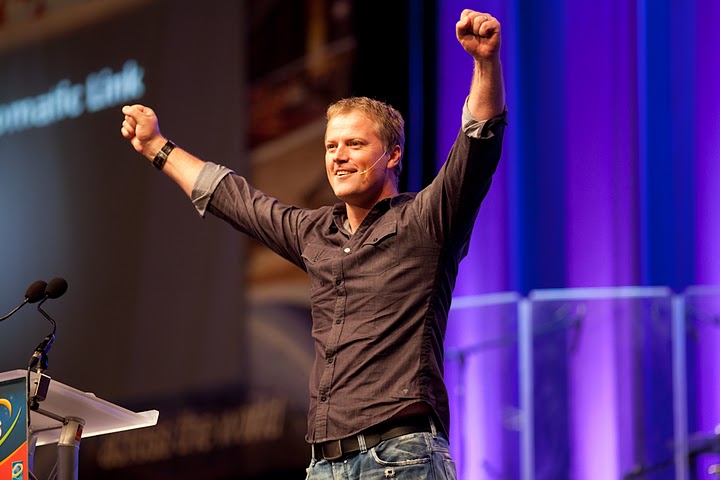
PJ Smyth is a young and dynamic Reformed Pastor from South Africa. I have never had the privilege of meeting him but I have prayed for him (as a great many others have also) in hearing of his battle with cancer at such a young age. I have followed his health updates (online) over the last six months or so and have also passed them on to others who have prayed. We can give thanks to God that after extensive and invasive chemotherapy, he is now declared “cancer free” by the doctors (or in remission), and we pray that would continue.
Its been a long battle but he recently had enough energy to preach a sermon concerning his learning process over the last year or so. It is VERY insightful and heart warming. It will do your heart and your head much good!
You can hear it here:
Someone in attendance took notes as PJ was speaking. Here’s what they wrote:
8 ways he has tried to live in response to his cancer this past year (Note that at times in these notes I refer to PJ as “I”!)
1. I reflected on the possible sources of sickness
a. The fall Genesis 3:3. You will surely die. The common pattern of this world is live, get sick, die. Romans 8 we are in bondage to decay. There are no 120 year old faith healers!
b. Foolish living. Sowing and reaping. If you crash your car don’t blame others. Poor diet, pollution, etc.
c. Satan (Luke 13, Acts 10:38). The default option of Jesus and the local church is to treat sickness as the work of Satan.
d. Sin. John 9. Jesus said “Neither this man nor his parents sinned…” He doesn’t say all sickness is caused by specific sin, but it can be.
Psalm 32. David is sick because of his sin.
1 Corinthians 11. Many were sick and some had already died because of abusing communion.
Usually it is not a specific sin that leads to death but it can be.
“Sin deserves death and it is because of God’s mercy that we are not each struck down whenever we sin.” – Carson
e. Direct from God. Actively instigated or actively permitted.
Knowing that God is in control (God’s sovereignty) is very comforting. If it was outside of his rule it would mean he cant heal us.
If he can’t prevent it how can he stop it? How can he use it for my good either? We would lose Romans 8:28.
If you try and rescue God from responsibility for suffering then you rescue him from being God, and that is about as uncomforting as things can be.
2. I reflected on the possible sources of healing
a. the power of the cross – the place of victory over sin and all its evil relations – sickness, suffering and death.
Matthew 8 “This was to fulfill what was spoken by the prophet Isaiah” Isaiah 53 is about the cross, so there is a clear link between the cross and healing. Some feel it is automatic. Some say that Christ purchased healing for us and by faith we apply for divine health now automatically. Others say the cross is the source of all healing power but if someone is not healed it is not a failure in the cross or faith because it is not automatic. Believing the automatic link is the primary source of confusion and disillusionment when healing doesn’t happen.
PJ believes completely that God heals today but he does not believe the automatic link. We can have success in healing without believing in this automatic link.
Continue reading
 This insightful article was written by my friend John Hendryx, founder and overseer of the vast theological website of monergism.com:
 When people ask me what historic Christian creeds I affirm I say: