The Size of the Universe (2)
Reply

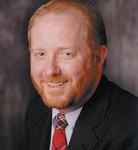
 WARNING: Powerful, potent, hypocrisy crushing, non-politically correct insight from the pen (or keyboard) of R. C. Sproul, Jr. This is definitely not something for the feint of heart. – John
Main steam media tags the Norwegian killer as a Christian, and Christians, naturally object. What, I wonder, do our objections say about us? First, is it really inconceivable that this man is a Christian? It may be unlikely. And I may not like it. But I fear our objections run flat into our confession. We are sinners. We are capable of all manner of sin. Are we not betraying a Pelagian sensibility if we protest, “Well, we’re sinners. But not like THAT!!”
I know a man who was a believer. He was well respected, and served God’s people in a position of visible leadership. He wrote some of the most beloved songs that are still sung among God’s people. While he was a believer he started an adulterous relationship. To keep himself from being caught he murdered the woman’s husband. Could such a man be a Christian? Well, God says he, David, was God’s own friend.
Do Christians commit murder? Of course they do. Is there some magic number, somewhere between one and a hundred where we can draw a line? I think not. Christians do not, however, murder freely, continuously, without repentance. They do not give themselves over to their sins. If they do, they no longer commit such sins, but practice them, showing their profession to be less than credible. Remember that, quite apart from the reality that we are all guilty of unjustified anger against our brothers, it is likely that your church has a number of saints who have murdered- some aborting their babies, others encouraging their wives, daughters, girlfriends to abort their babies.
Which brings us to the second point. What happens when we define a Christian as broadly as “One who professes to be a Christian?” Who are we to say this man is not a Christian? The better, the more historic question is, “Who is he to say that he is?” The credibility of a person’s profession of faith did not used to and should not ever rest in the one making the profession. Rather it belongs with those who hold the keys, with the elders of the local church. Where are the elders that are ready to stand up and say, “This man is a Christian, as far as we can tell”? There are no such elders, because he is under no such authority.
 Those who object to the accuracy of the man’s profession then had better embrace a more robust ecclesiology than we are used to in our day. Without a body of elders who know you, who are in authority over you, how is your profession any better than this man’s? The loosey-goosey I-have-a-love-for-Jesus-in-my-heart, why should I need to join a church is a-historical, unbiblical and rebellious. If you cannot name the elders who will have to give answer for your soul (see Hebrews 13:17 and I Peter 5:7) then why would anyone feel compelled to accept your profession? Is a “Christian” who will accept no authority, in principle, any worse than a “Christian” who commits mass murder?
Would we not be more faithful Christians were we to confess that we too are capable of murder? Would we not profess more accurately, were we to confess that there but for the grace of God go we? Would we not confess the Lord, were we to profess that He redeems killers just like us? Would we not more confess the blood of Christ if we acknowledged His body, the church?
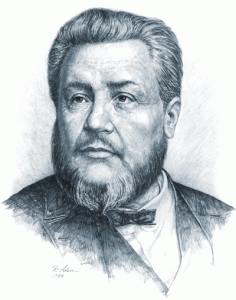 “To say that “a creed comes between a man and his God” is to suppose that which is not true; for truth, however definitely stated, that which I believe I am not ashamed to state in the plainest possible language; and the truth I hold I embrace because I believe it to be the mind of God revealed in his infallible Word. How can it divide me from God who revealed it? It is one means of my communion with my Lord, that I receive his words as well as himself, and submit my understanding to what I see to be taught by him. Say what he may, I accept it because he says it, and therein pay him the humble worship of my inmost soul.
I am unable to sympathize with a man who says he has no creed; because I believe him to be in the wrong by his own showing. He ought to have a creed. What is equally certain, he has a creed—he must have one, even though he repudiates the notion. His very unbelief is, in a sense, a creed.” – C. H. Spurgeon, from an article titled “The Baptist Union Censure,” published as an introduction to the 1888 volume of The Metropolitan Tabernacle Pulpit sermons
 “Doctrine divides!” That’s the popular belief of our culture today, as its sails on the shifting sea of modern day relativism. Our generation shouts out, “It doesn’t matter what you believe, as long as you are sincere,” yet the Bible portrays a very different message.
We have to admit that doctrine does in fact divide. It divides truth from error, the true prophet from the false prophet, and the real Christ from the counterfeit.
In another sense though, doctrine unites. It allows those who hold to the truth of Scripture to come together under the banner of that truth.
In this ocean of change, there stands a bedrock that has stood the test of time. It is an ancient creed that offers a sure and safe haven, and is an anchor in a theological world adrift and deceived. Christians throughout the centuries have built their lives on it, believing that its statements are merely reflections of what the Bible teaches about God, His Son, Jesus Christ, and the life the Holy Spirit brings to His Church.
The Apostles’ Creed portrays the very heart of the Christian faith the core teachings that are dispensed with only at great peril to the soul. It is the theological and orthodox “bottom line” concerning what we as Christians believe, and it dates from very early times in the Church, a half century or so from the last writings of the New Testament.
THE APOSTLES’ CREED
I believe in God, the Father Almighty, the Creator of heaven and earth and in Jesus Christ, His only Son, our Lord:
Who was conceived of the Holy Spirit, born of the Virgin Mary, suffered under Pontius Pilate, was crucified, died, and was buried.
He descended into hell.
The third day He arose again from the dead.
He ascended into heaven and sits at the right hand of God the Father Almighty, whence He shall come to judge the living and the dead.
I believe in the Holy Spirit, the holy *catholic church, the communion of saints, the forgiveness of sins, the resurrection of the body, and life everlasting. Amen.
* The word “catholic” refers not so much to the Roman Catholic Church, but to the universal church of the Lord Jesus Christ.
In a similar way, the Nicene creed has helped even further to define what the Scriptures teach.
THE NICENE CREED
I believe in one God, the Father Almighty, Maker of heaven and earth, and of all things visible and invisible.
And in one Lord Jesus Christ, the only-begotten Son of God, begotten of the Father before all worlds; God of God, Light of Light, very God of very God; begotten, not made, being of one substance with the Father, by whom all things were made.
Who, for us men for our salvation, came down from heaven, and was incarnate by the Holy Spirit of the virgin Mary, and was made man; and was crucified also for us under Pontius Pilate; He suffered and was buried; and the third day He rose again, according to the Scriptures; and ascended into heaven, and sits on the right hand of the Father; and He shall come again, with glory, to judge the quick and the dead; whose kingdom shall have no end.
And I believe in the Holy Ghost, the Lord and Giver of Life; who proceeds from the Father and the Son; who with the Father and the Son together is worshipped and glorified; who spoke by the prophets.
And I believe one holy catholic and apostolic Church. I acknowledge one baptism for the remission of sins; and I look for the resurrection of the dead, and the life of the world to come. Amen.
Then a third creed, known as the Athanasian creed, named after Athanasias, was developed as a standard for Christian belief. Continue reading