
 James Montgomery Boice:
In what way do the Scriptures represent the sacraments of the church as being different from other practices, such as the reading of Scripture or prayers, which are not sacramental? What constitutes a sacrament? There are four elements.
1. The sacraments are divine ordinances instituted by Christ himself. In that respect the sacraments are similar to other necessary ordinances which also form part of the church’s worship—prayer, for example. Christ told us to pray. But they differ from things which we may do but which are not commanded. We sing when we assemble, and we have biblical warrant for it, including the example of Jesus and his disciples (Mk. 14:26). But the singing of hymns is not specifically commanded by the Lord and consequently falls in the category of those things which are permissible and even good but not mandatory. The sacraments are mandatory. The Lord’s Supper was instituted by Jesus on the night in which he was betrayed. Baptism was instituted shortly before his ascension into heaven.
2. The sacraments are ordinances in which material elements are used as visible signs of God’s blessing. In baptism the sign is water. In the Lord’s Supper two signs are used: bread, which signifies the broken body of the Lord Jesus Christ, and wine, which signifies his shed blood.
This feature is important in understanding the nature of a sacrament. It sets baptism and the Lord’s Supper off from other proper but nonsacramental things, which do not use a material element as a sign. The material element distinguishes the sacrament from the reality that it signifies. A sign is a visible object that points to a reality different from and more significant than itself. A sign saying “New York” points to New York. A sign reading “Drink Coca-Cola” directs our attention to Coca-Cola. The sacrament of baptism points to our identification with Christ by faith. The Lord’s Supper points to the reality of our communion with him. In the case of the sacraments, the sign is secondary, outward and visible. The reality is primary, inward and invisible.
An important consequence of this is that neither baptism nor the Lord’s Supper make or keep one a Christian. That is, we do not become a Christian by being baptized, nor do we remain a Christian by “taking communion” periodically. Those signs merely point to something that has taken place or is taking place internally and invisibly.
 Again, a sign frequently indicates ownership, and the sacraments do that too, particularly baptism. Baptism indicates to the world and to ourselves that we are not our own but that we have been bought with a price and are now identified with Jesus. That truth was a great comfort to Martin Luther, who had times when he was confused about everything, no doubt because of the strain of being in the forefront of the Reformation for twenty-eight years. In those bleak periods he questioned the Reformation itself; he questioned his faith; he even questioned the value of the work of the Lord Jesus Christ on his behalf. At such times, we are told, he would write on his table in chalk the two words Baptizatus sum! (I have been baptized!). That would reassure him that he really was Christ’s and had been identified with him in his death and resurrection.
3. The sacraments are means of grace to the one who rightly partakes of them. In saying this we must be careful to point out that we are not therefore assigning some magical property to baptism or the observance of the Lord’s Supper, as if grace, like medicine, is automatically dispensed along with the material elements. That error, in regard both to the sacraments and grace, led to the abuse of the sacraments in the early Roman Catholic Church and then later in some of the groups that emerged from the Reformation. In each case the sacrament rather than faith became the means of salvation. The custom arose even of delaying baptism (in particular) until the last possible moment before death, in order that the greatest number of sins might be washed away by it.
To say that the sacraments are not magical or mechanical, however, does not mean that they do not have value. God has chosen to use them to encourage and strengthen faith in believers. Thus, they presuppose the acknowledgment of God’s grace by the one who partakes of them, but they also strengthen faith by reminding the believer of what they signify and of the faithfulness of the One who has given them. John Murray writes, “Baptism is a means of grace and conveys blessing, because it is the certification to us of God’s grace and in the acceptance of that certification we rely upon God’s faithfulness, bear witness to his grace, and thereby strengthen our faith.… In the Lord’s Supper that significance is increased and cultivated, namely, communion with Christ and participation of the virtue accruing from his body and blood. The Lord’s Supper represents that which is continuously being wrought. We partake of Christ’s body and blood through the means of the ordinance. We thus see that the accent falls on the faithfulness of God, and the efficacy resides in the response we yield to that faithfulness.”
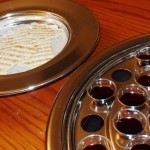 4. The sacraments are seals, certifications or confirmations to us of the grace they signify. In our day the use of seals is infrequent, but the examples we have suggest the idea. The seal of the United States of America appears on a passport, for example. It is stamped into the paper so that the document cannot be altered, thus validating the passport and showing that the one possessing it is a United States citizen. Other documents are validated by a notary public. The notary’s seal is confirmation of the oath taken. The sacraments are God’s seal on the attestation that we are his children and are in fellowship with him.
 Back in 2009 Ligonier Ministries hosted a Conference for Pastors and Leaders called “Pillars of the Christian Faith.” It was described in the following way:
 I would also encourage you to allow for time to reflect on the truth you hear and to pray that it may effect both change, new focus and refreshing of vision in your heart, life, and ministry to others. I suggest this because I believe your soul will be greatly enriched by this process, just as mine has been.