
SCRIPTURE ALONE?
“Just for once, I’d like to see Catholics and Orthodox engage with ‘Sola Scriptura’ for what Protestants think it is, not what Catholics/Orthodox think it is. Catholics/Orthodox treat Sola Scriptura as meaning that each private individual is free to determine purely for himself what Scripture means, in complete disregard of the ‘sensus fidelium’ (common understanding of the faithful), the ecumenical creeds, the historic view of theologians and exegetes across the centuries and traditions, and the judgment of linguistic experts about Hebrew and Greek.
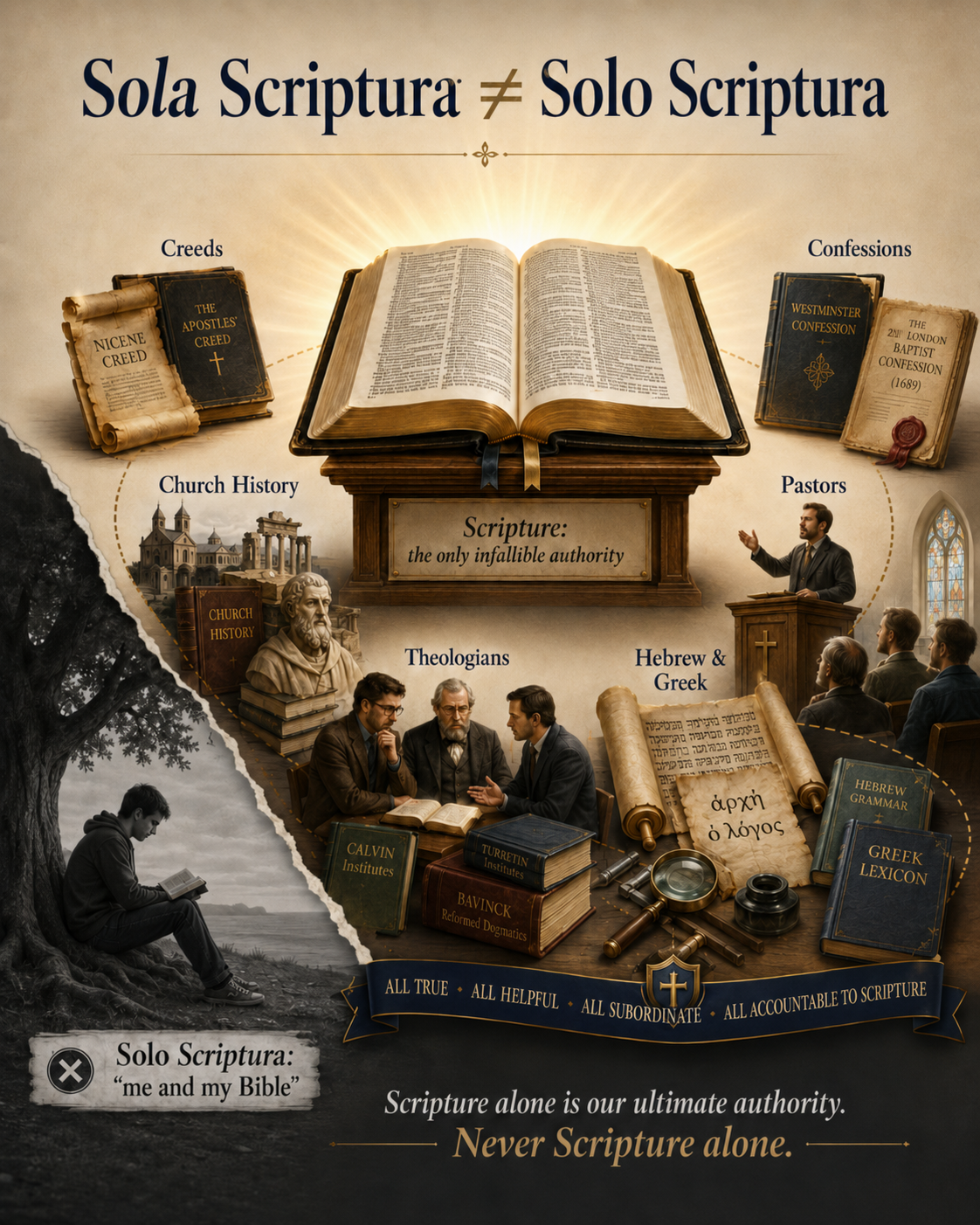
But that isn’t what Sola Scriptura means. That’s a vainglorious delusion. Sola Scriptura simply means that Scripture is the only infallible authority in and over the Church. But how we understand and interpret Scripture, that’s where the help, guidance, wisdom, and expertise of other divinely provided means are essential. You can’t just sit by yourself under a tree with a Bible (a translation into English of variable reliability), and expect to figure it all out perfectly on your own. That’s not Sola Scriptura, it’s self-conceited madness.”
– Nick Needham
My commentary: Sola Scriptura should not be confused with solo Scriptura, as though Protestants mean “me, my Bible, and no one else.” The classic Protestant claim is that Scripture alone is the only infallible authority over the church, while creeds, confessions, church history, pastors, theologians, and language scholars remain valuable but fallible helps.
Roman Catholic and Orthodox critics may say this still leaves final interpretive judgment with individuals or Protestant churches, but Protestants answer that fallible human judgment is unavoidable for everyone, including those who choose Rome or Orthodoxy.