
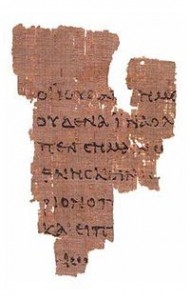
 P52 (Papyrus number 52), is the earliest manuscript fragment we have of the New Testament.
The early Christians were generally not the richest people in society and so to spread the message of Christ in written form, they would often use both sides of an expensive papyrus. That is the case here with P52.
As Wikipedia states, the style of the script is strongly Hadrianic, which would suggest a most probable date somewhere between 117 AD and 138 AD. However it is difficult to be precise in fixing a date and the evidence does allow for a much wider range, potentially extending from before 100 AD past 150 AD. The fragment of papyrus was among a group acquired on the Egyptian market in 1920 by Bernard Grenfell, but the original transcription and translation was not carried out until 1934, by Colin H. Roberts.
The fragment comes from the Gospel of John chapter 18, verses 31-33 in Greek. The letters in bold are the ones found on the fragment:
?? ???????? ???? ??? ??????? ??????????
OY???? ??? ? ????? ??? ????? ??????? ?? ??-
??? ?H?????? ???? ?????? ??????? ???-
??H????? ???????? ??? ????? ??? ?? ??????-
???? ? ?I????? ??? ???????? ??? ??????
??? ????? ???? ?? ?? O ???????? ??? ???-
?A??N
Translated into English it reads:
the Jews, “For us it is not permitted to kill
anyone,” so that the word of Jesus might be fulfilled, which he
spoke signifying what kind of death he was going to
to die. Entered therefore again into the Praeto-
rium Pilate and summoned Jesus
and he said to him, “Thou art king of the
Jews?”
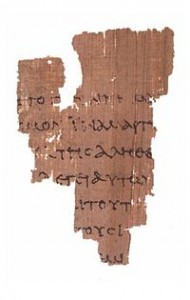 And on the other side of the fragment, from John 18: 37,38 it reads:
???????? ???? ??? ??? TO??? ??????????
??? (??? ?????) ??????? ??? ??? ?????? ??? ????Y–
???? ?? ??????? ??? ? ?? E? ??? ?????I–
?? ?????? ??? ??? ????? ????? ????
? ??????? ?? ????? ??????? ?A? ????O
????? ????? ??????? ???? ???? ???-
?????? ??? ????? ?????? ??? ???E????
??????? ?? ???? ??????
…
a King I am. For this I have been bornand (for this) I have come into the world so that I would
testify to the truth. Everyone who is of the truth
hears of me my voice.” Said to him
Pilate, “What is truth?” and this
having said, again he went out unto the Jews
and said to them, “I find not one fault in him.”
To make sense of all this in terms that those new to the arena of manuscript evidence can understand, Dr Dirk Jongkind, a Research Fellow at Tyndale House, explains: